I recently worked on a redesign of the PA0FRI active antenna using high-speed
BFR93A, BFR106, and BFR193 transistors. As a fallback in case of issues, we
planned to use NXP MMBT2222A,215 transistors.
Design
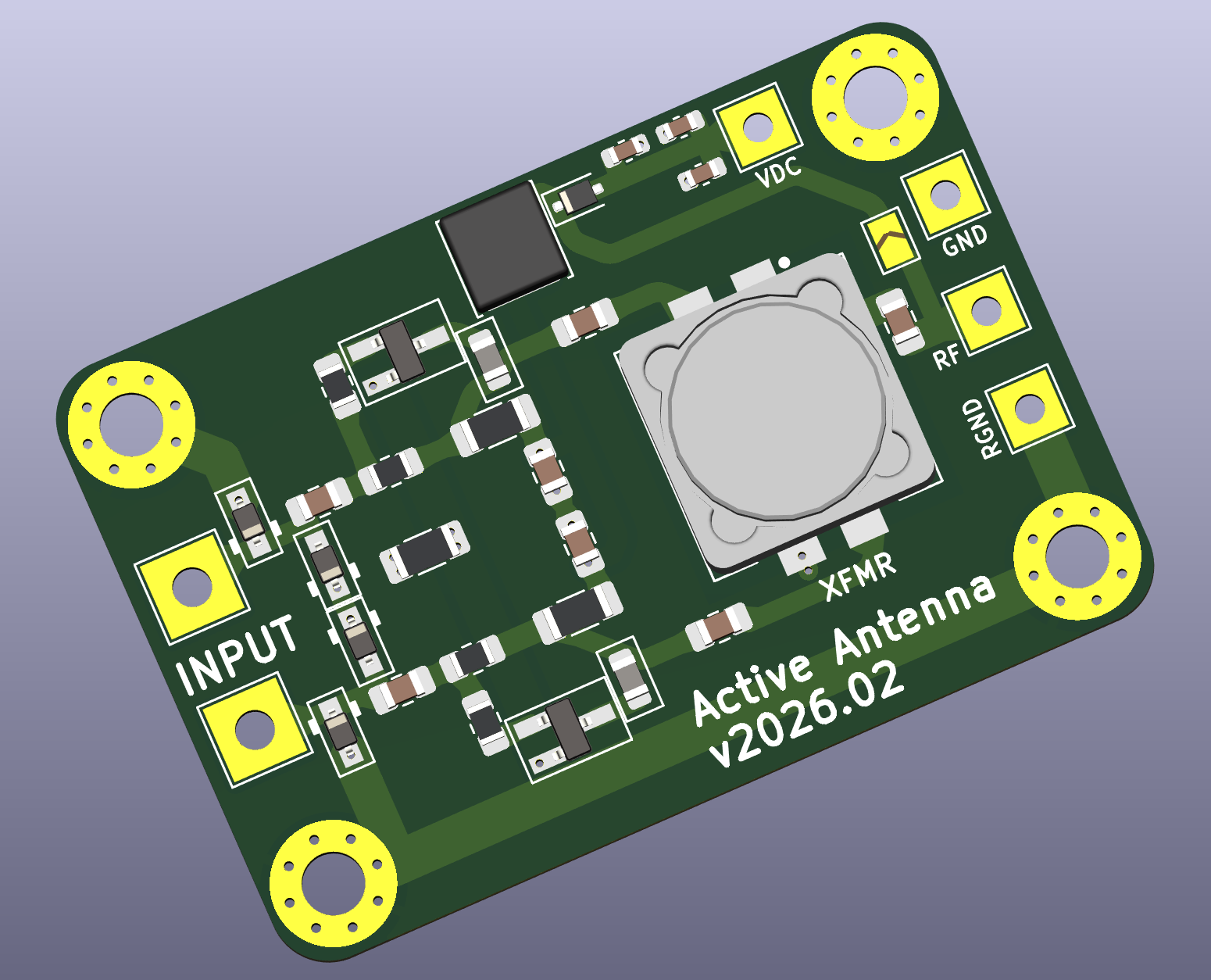
3D render:
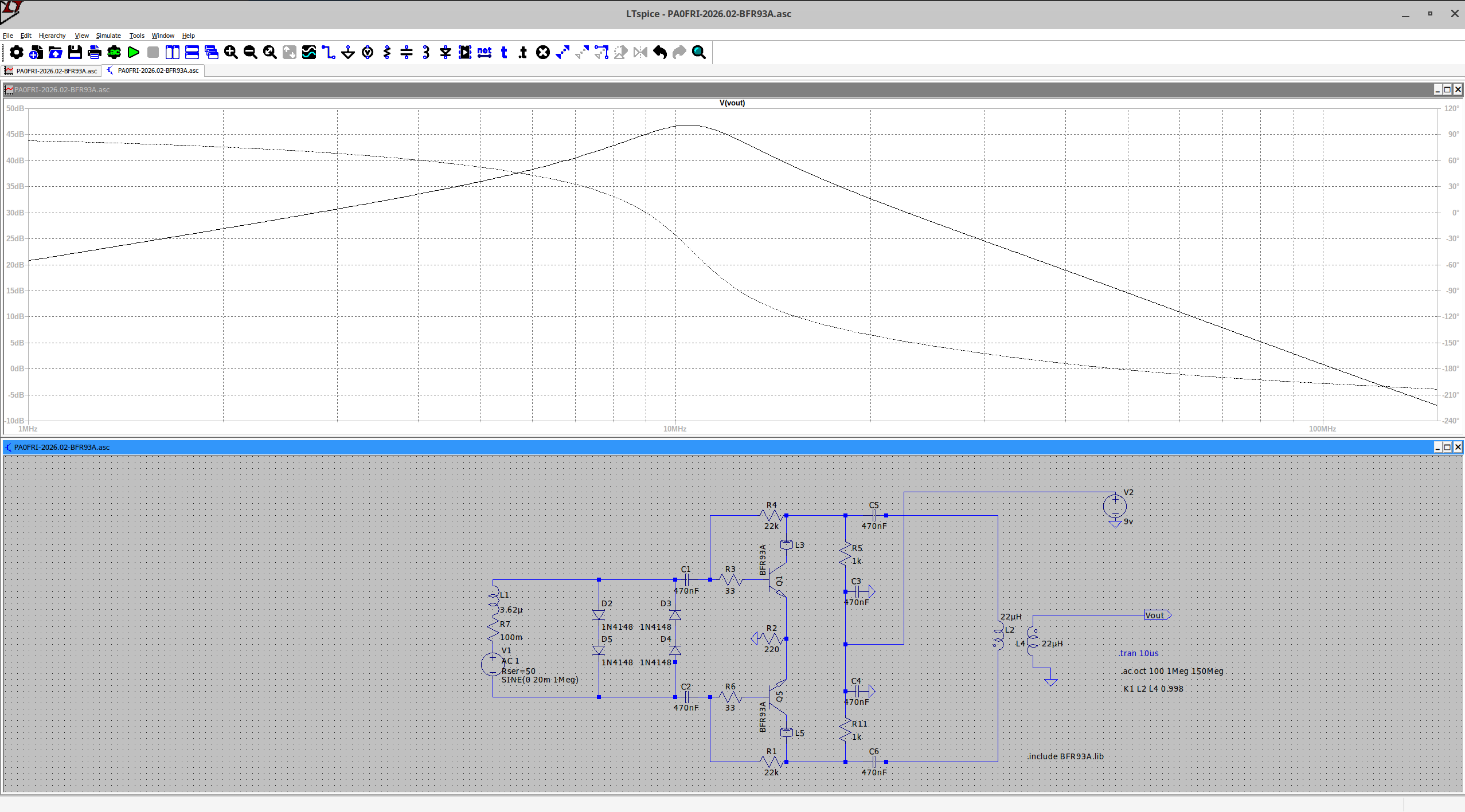
Schematic:
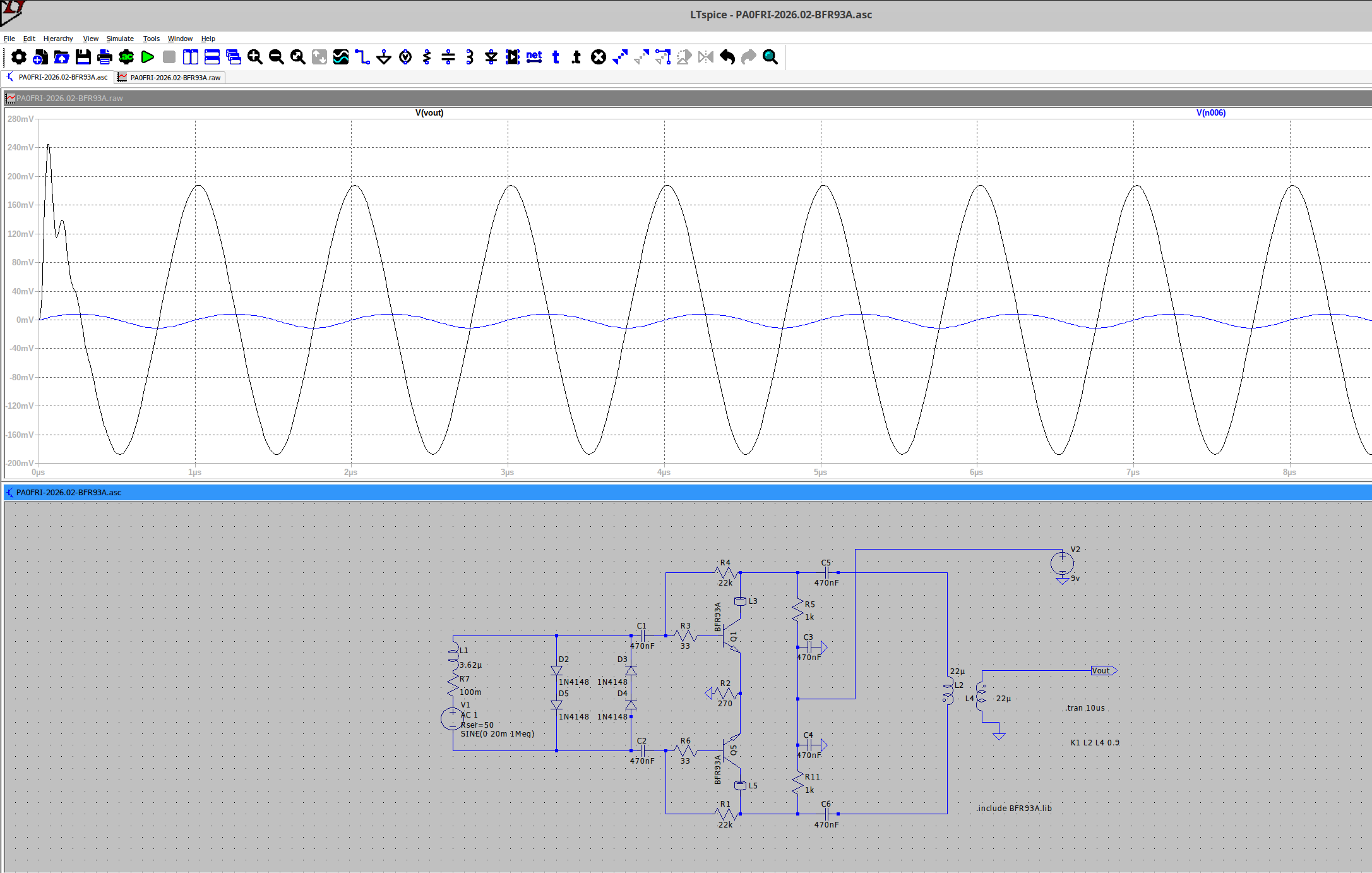
Simulation Results
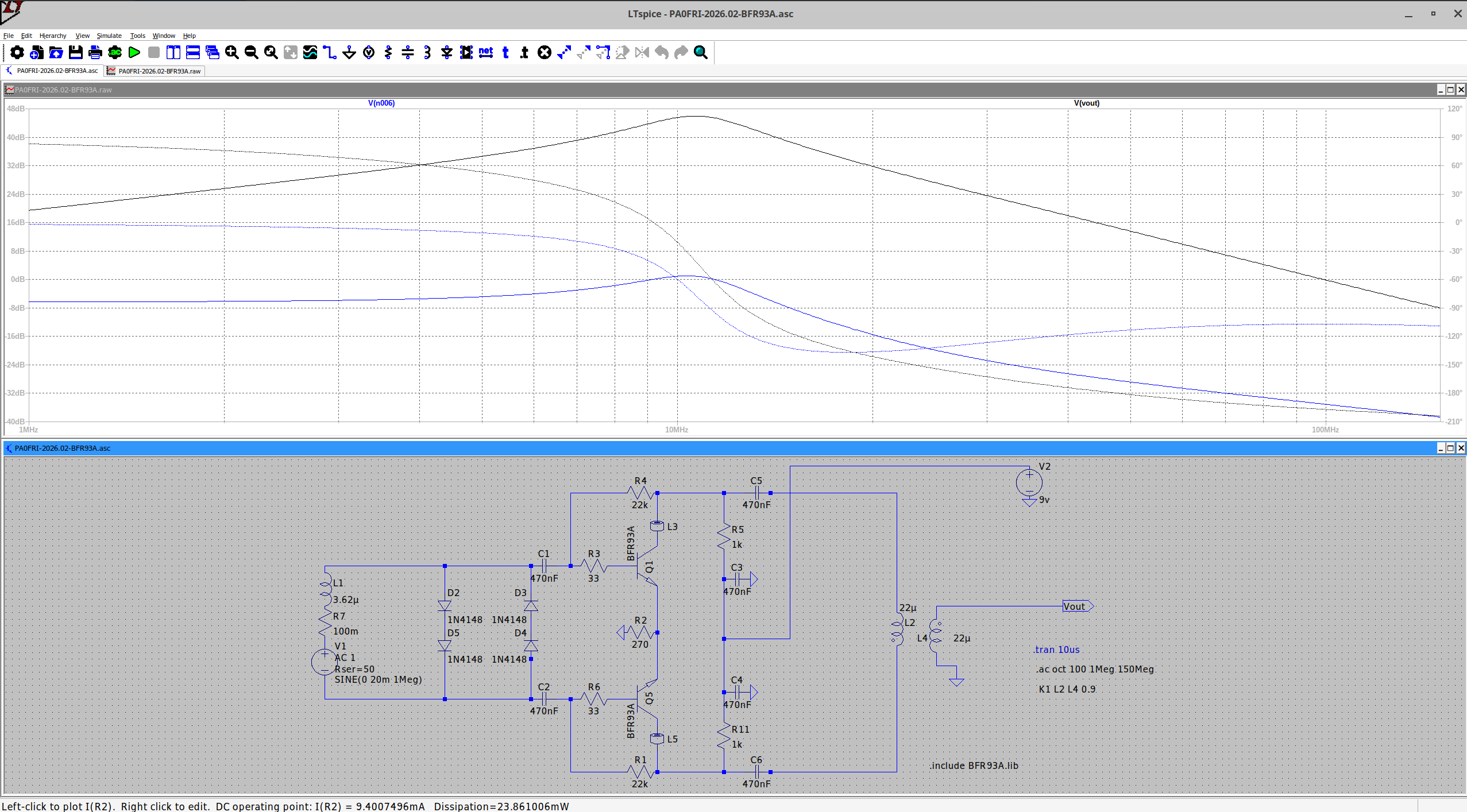
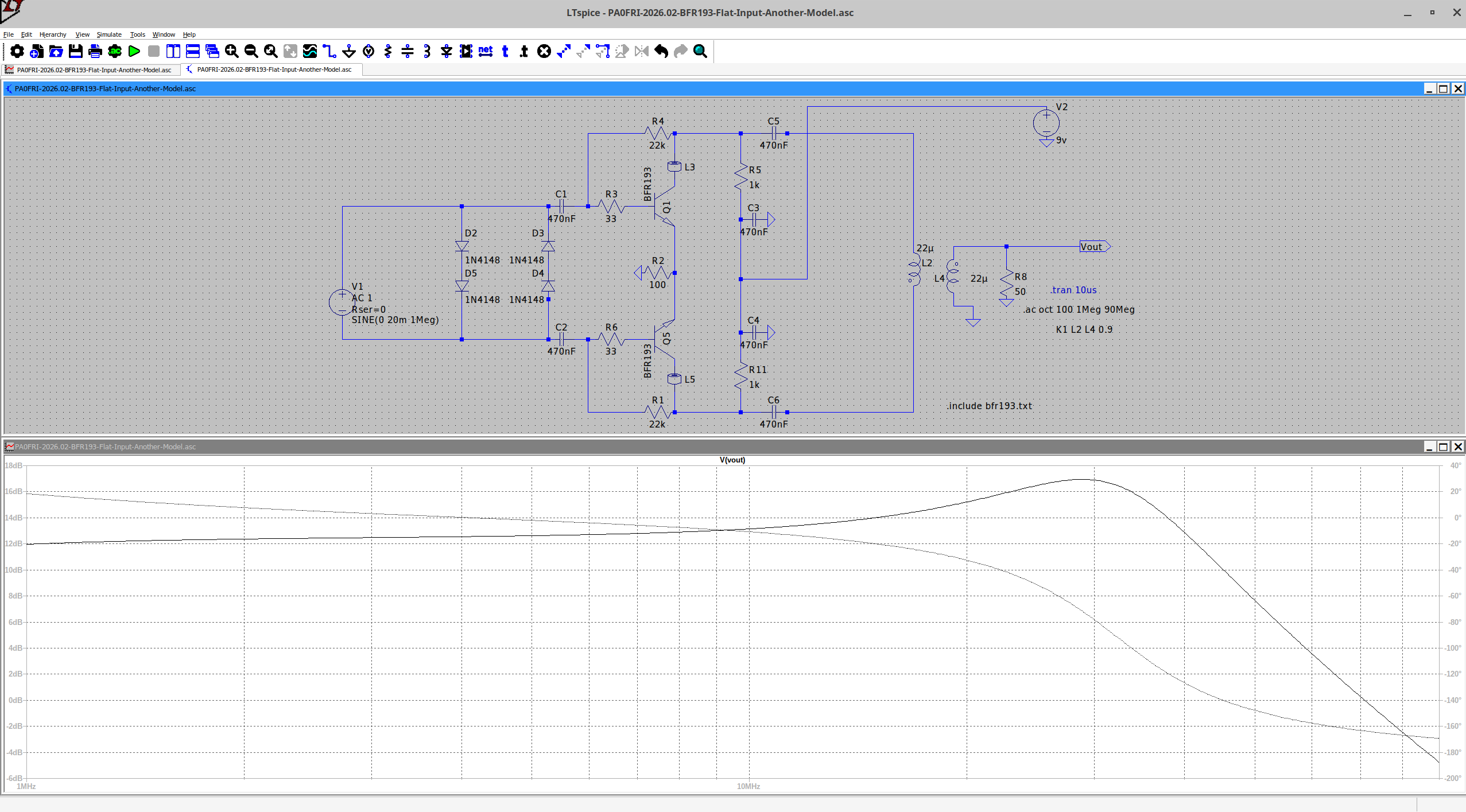
Using BFR193 transistors:
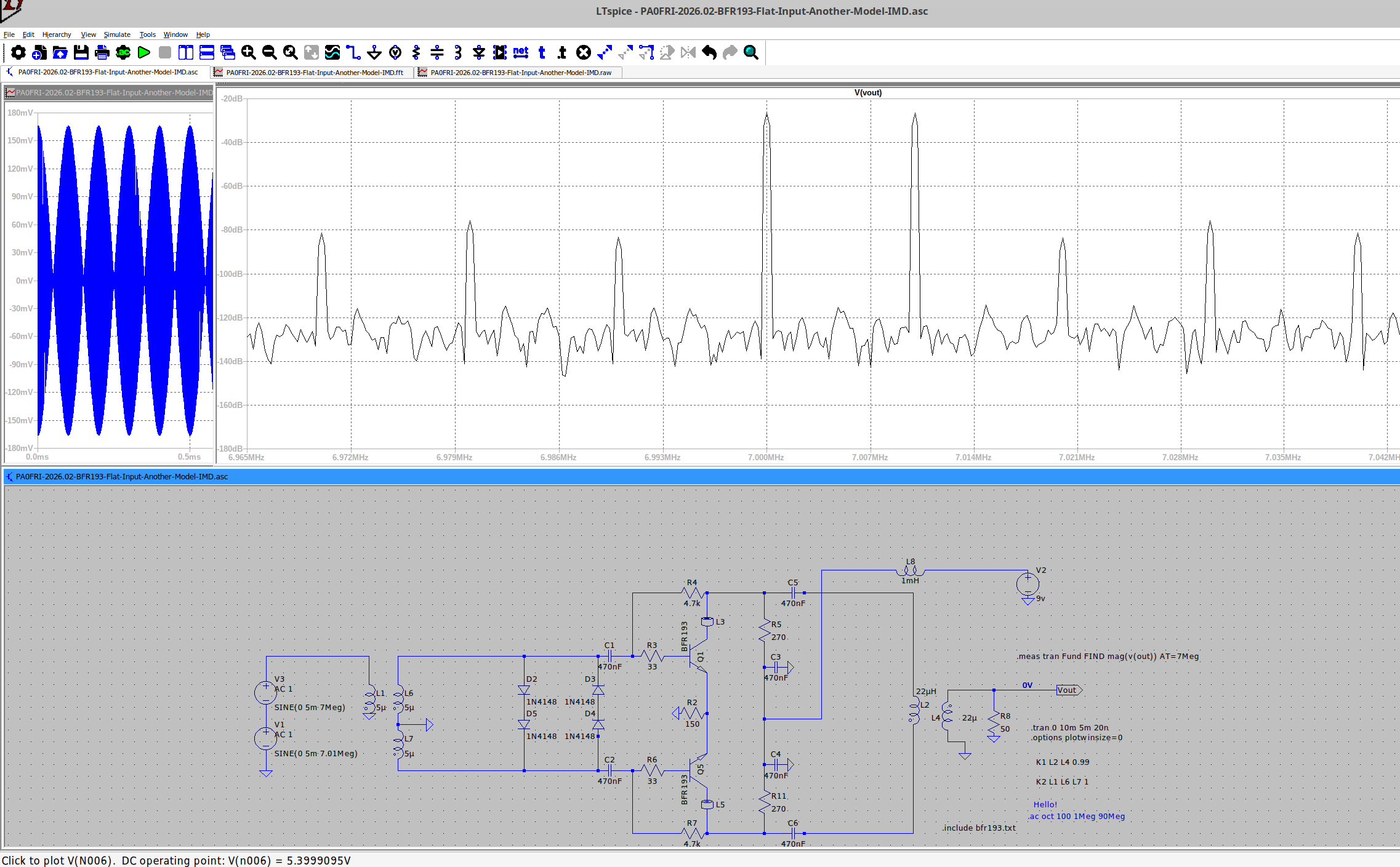
With a more faithful simulation and stronger biasing, we were able to improve the OIP3 figure.
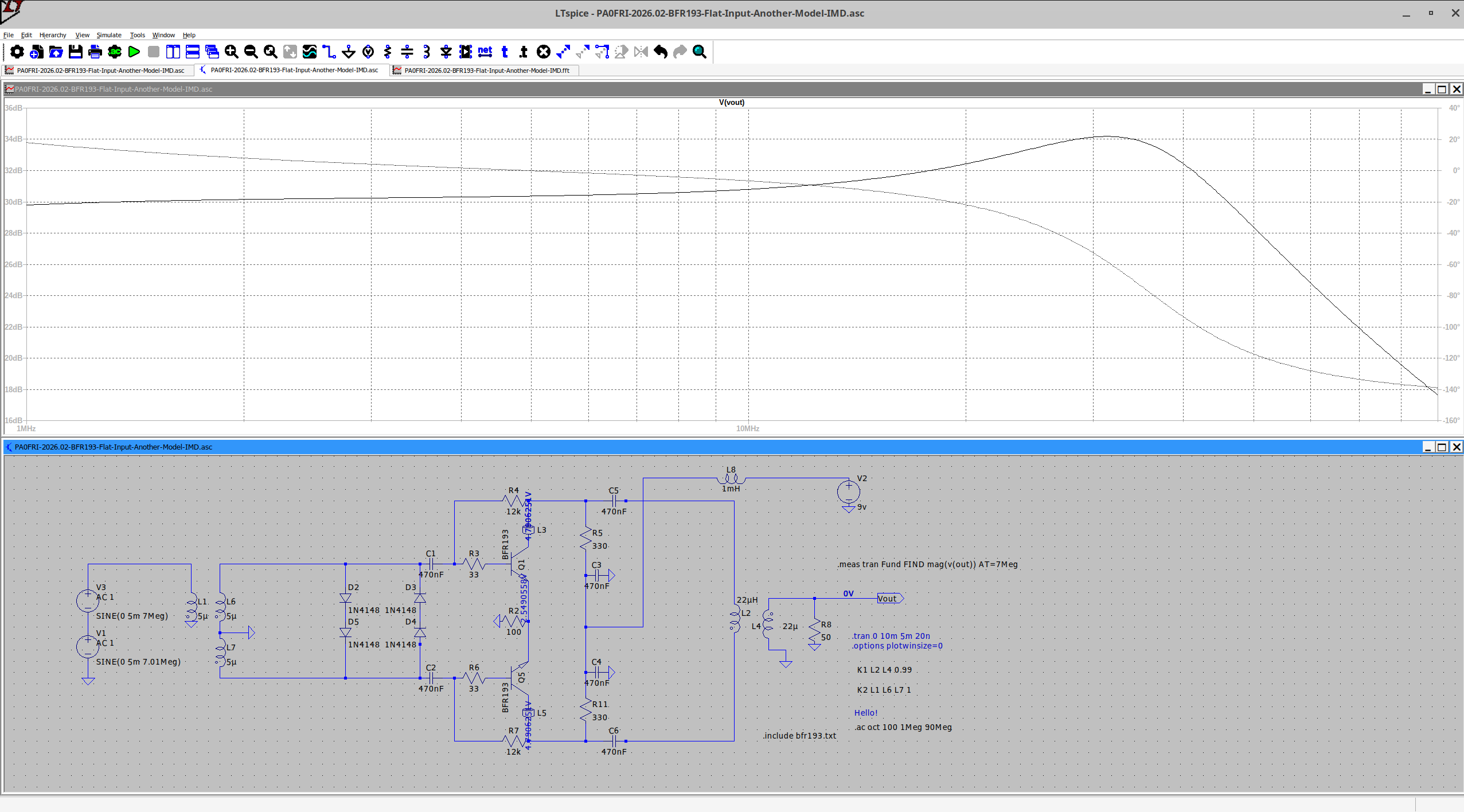
Final bias values:
Updates
March 2026: The design worked immediately and current consumption matches the simulations closely.
With and without the PA0FRI Active Antenna 2026:
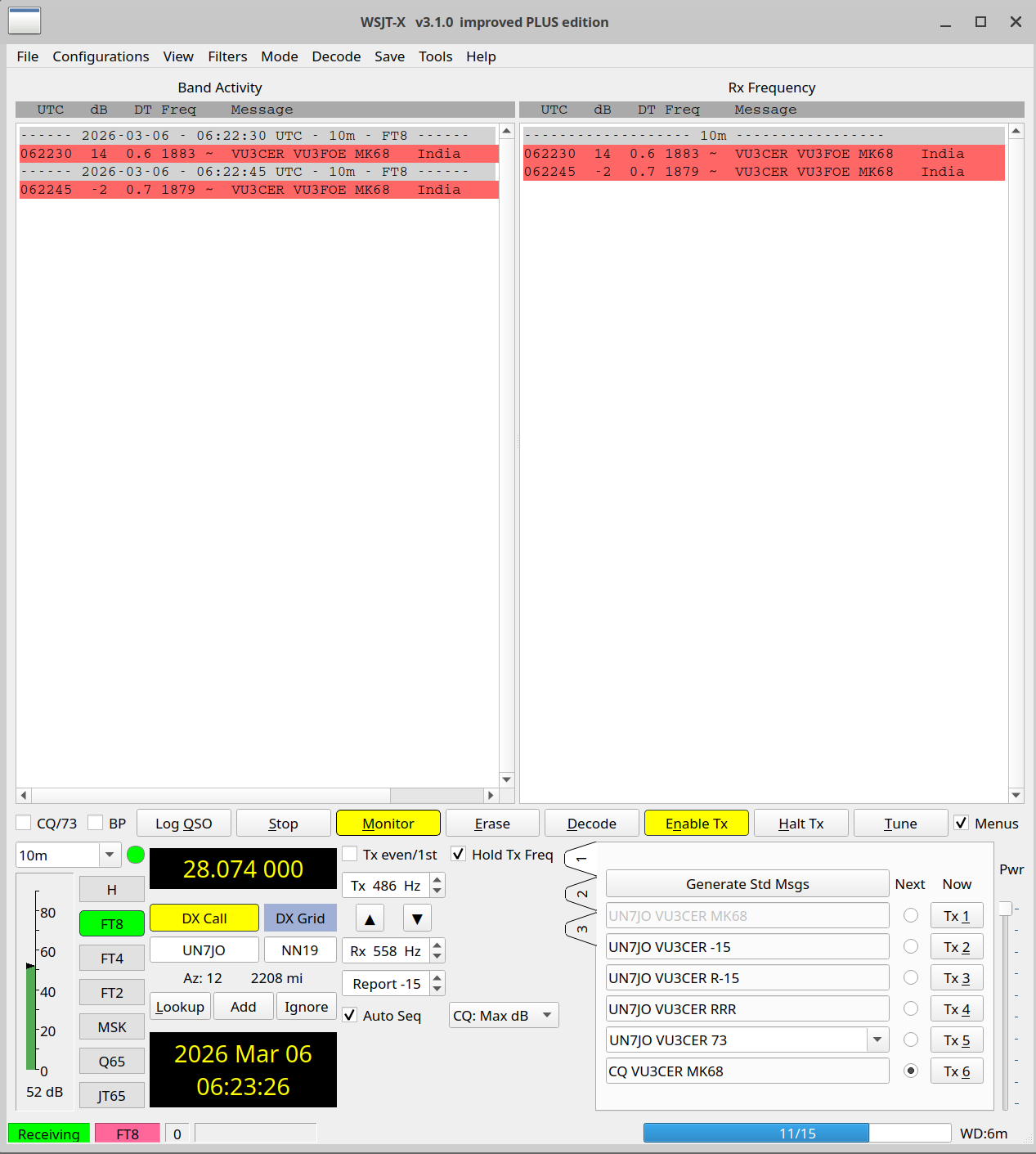
On-air testing:
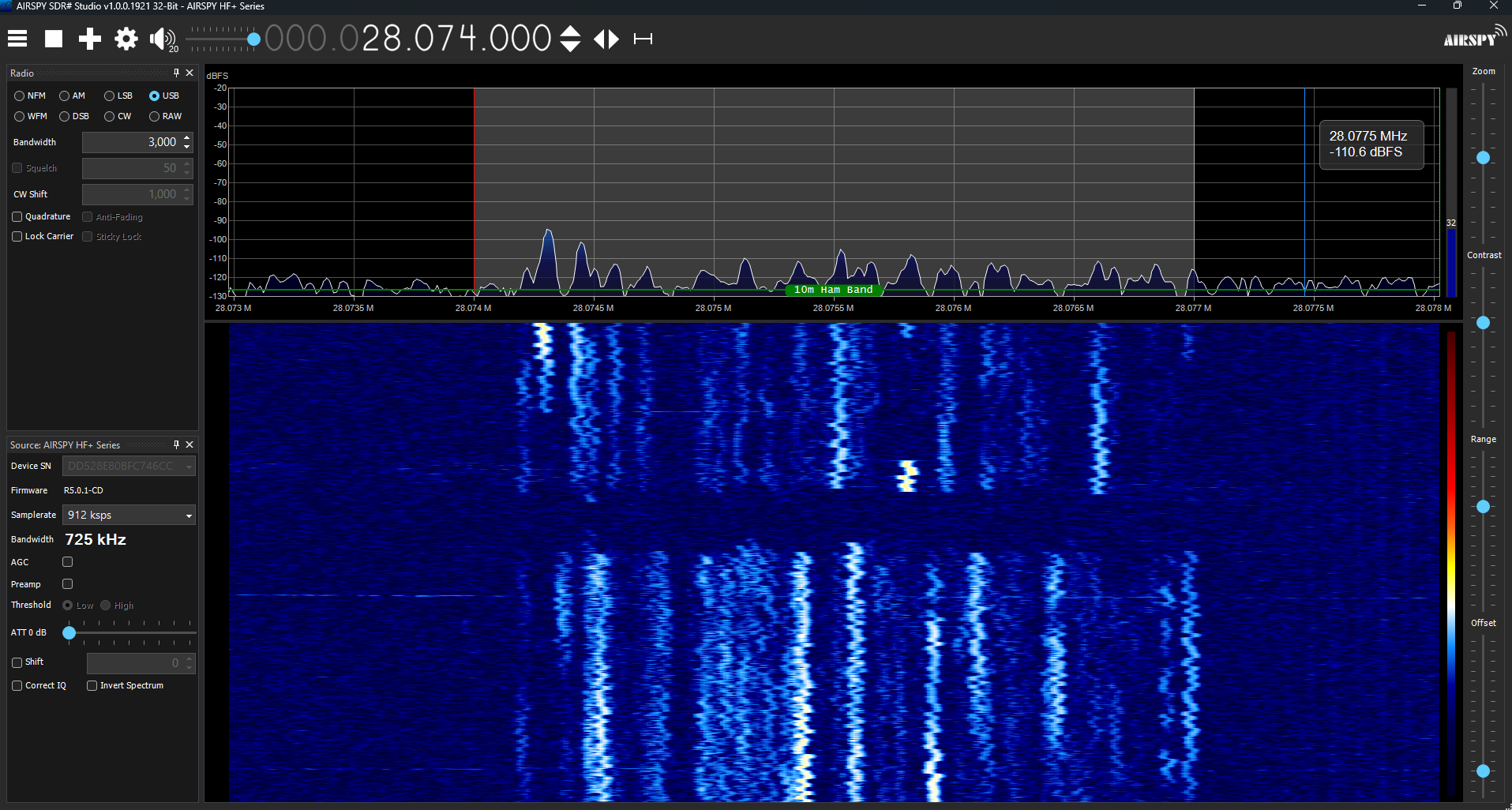
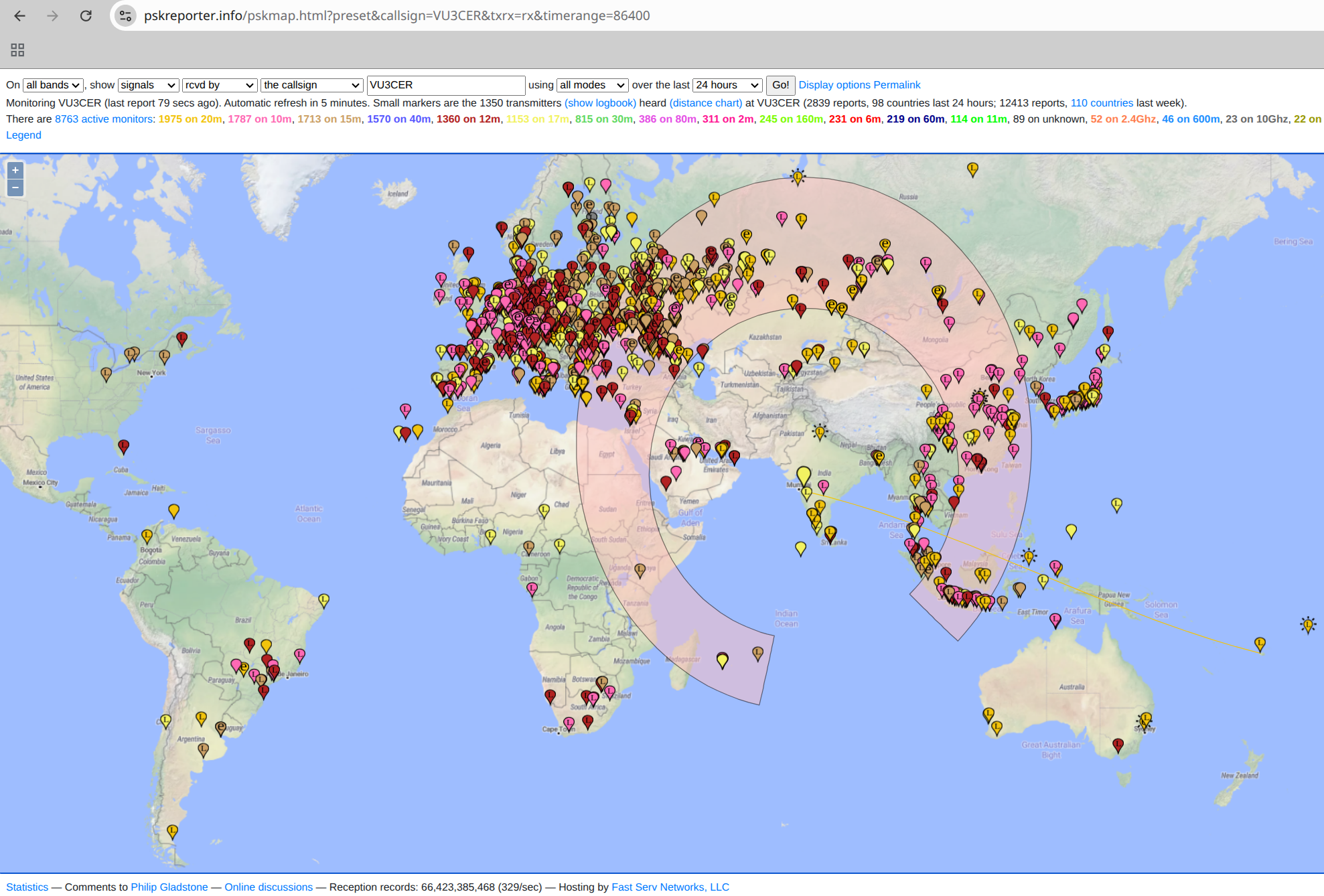
15-March-2026: To improve the reliability and ruggedness, we substituted the
BFR193 parts with the common and 'boring' MMBT2222A,215 transistors.
With and without the PA0FRI Active Antenna 2026:
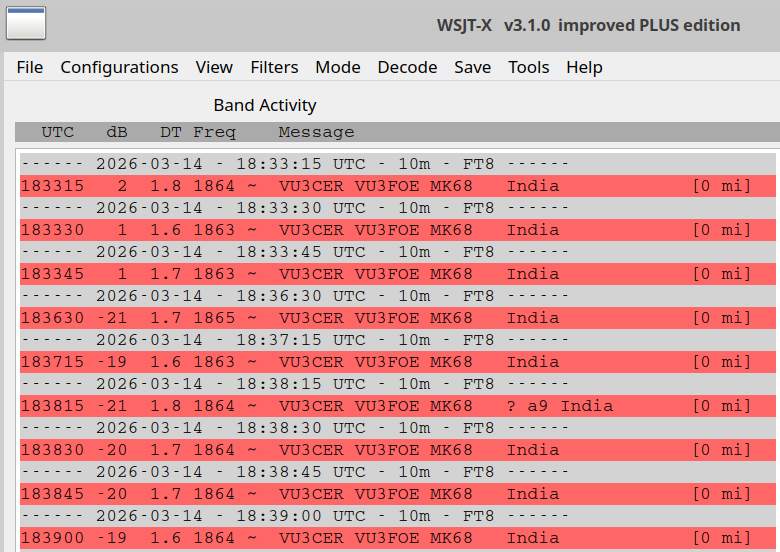
Conclusion: The PA0FRI Active Antenna 2026 has more than enough gain on 28 MHz
with NXP MMBT2222A,215 transistors.
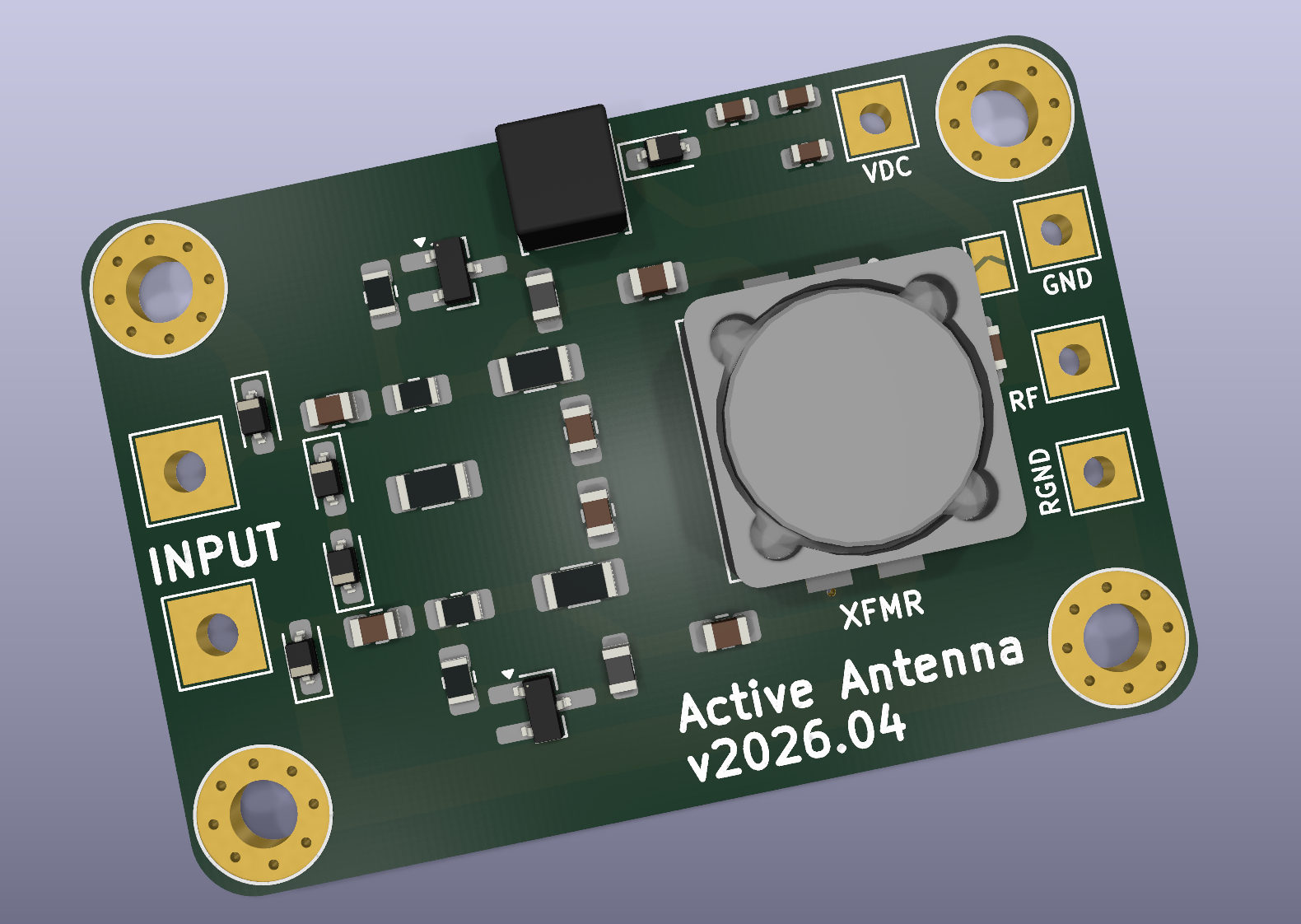
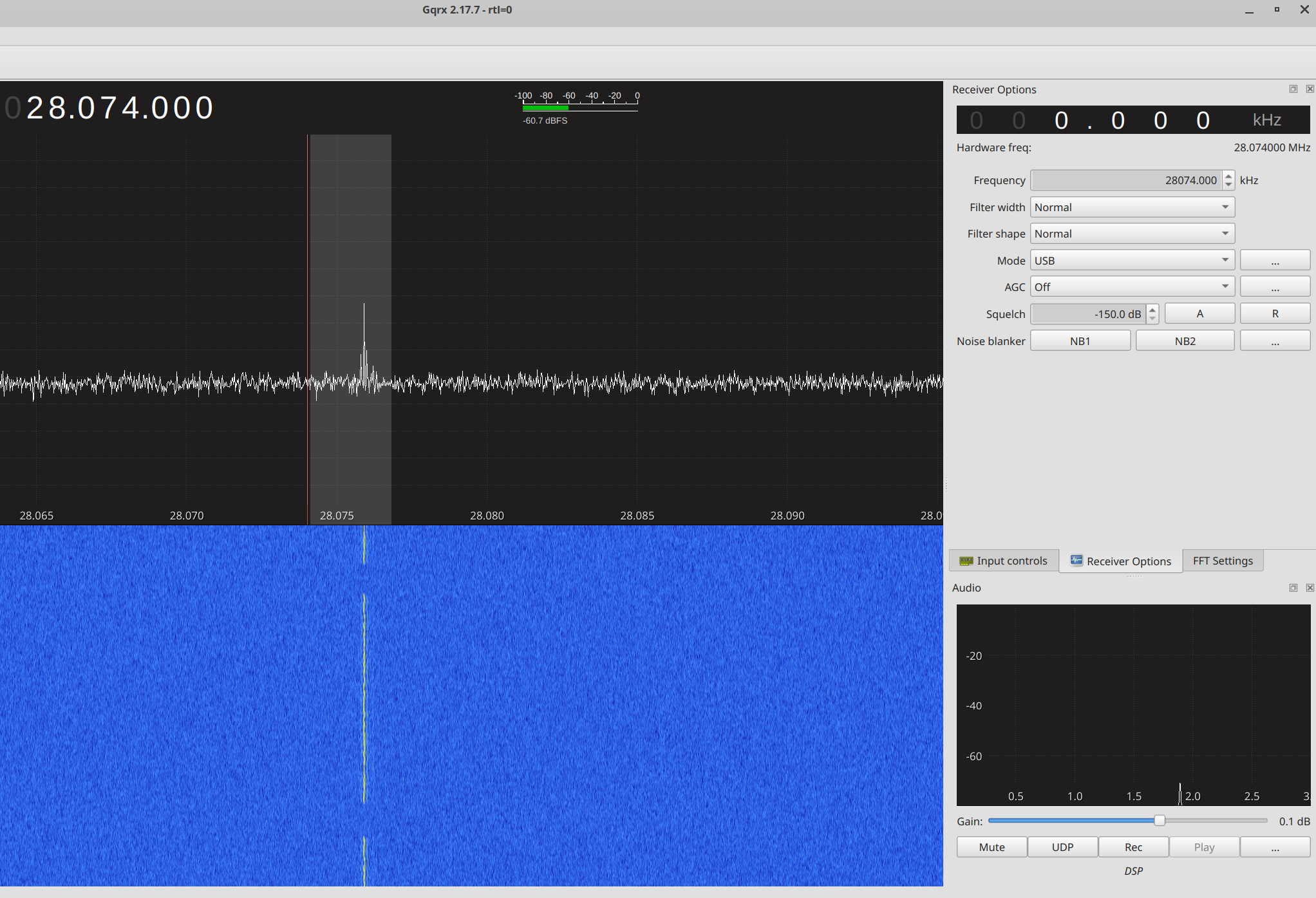
Proper SDR software settings for testing:
Notes
Three aspects of an active antenna that affect performance:
The installation location
The physical loop itself (currently a 1 m diameter RG-213 coax loop, shorted at both ends). We are not yet sure whether this helps the performance.
The active amplifier stage
The compact PCB fits within a Schedule-80 2-inch PVC endcap easily.