Photographers often say:
The best camera is the one you have with you.
DDX-UNO ("Digital Pixie") applies the same philosophy to amateur radio.
The best HF transceiver isn't necessarily the most powerful one. It's the one you remembered to bring.
Most HF stations remain at home. Portable radios often require batteries, coax cables, antenna tuners, protective cases, and a backpack full of accessories. The result is that many operators leave their radios behind.
DDX-UNO is designed to eliminate excuses.
We are not selling another HF transceiver. We are selling the moment HF stops being a station and starts being something you carry - everyday and everywhere.
Imagine a complete sub-1-watt HF digital transceiver smaller (but 'fatter') than a smartphone. Think BaoFeng Mini but even lighter? A tiny PCB protected by heat-shrink tubing contains everything needed for operation: RF front end, audio codec, microcontroller, filtering, and a built-in end-fed half-wave matching transformer. Just unfold the pluggable half-wave wire antenna and the counterpoise, plug into a phone, and get on the air.
Definition of Portability
If it fits in a small holiday backpack and is almost invisible in the wifey's eyes, it is portable. Bonus points if she mistakes it for a 'charging adapter' ;)
No, a setup with few meters of thin coax doesn't qualify - sorry! ;(
No Battery. No Coax. No Nuisance.
The transceiver draws power directly from the smartphone. A modern MCU handles audio processing, control, and autonomous operation even when a phone is disconnected. The radio can beacon, monitor, decode, or execute preconfigured tasks independently.
The goal is simple:
- No battery pack
- No coax cable
- No external tuner
- No enclosure
- Just radio
Prime Lenses, Not Zoom Lenses
Each DDX-UNO board is optimized for a single amateur band.
Rather than carrying one complicated wideband radio, operators carry several tiny dedicated boards - much like photographers choose multiple lightweight prime lenses instead of a single heavy zoom lens.
Need 20 meters today? Grab the 20-meter board.
Testing 30 meters tomorrow? Carry the 30-meter version.
Because every board is band-specific, compromises disappear. Filters are simpler (and on-board), performance improves, and construction costs remain low.
Hardware Philosophy
Each board contains:
- Dedicated low-pass filter for maximum efficiency
- Single-band RF optimization
- Compact SMD final amplifier
- Integrated EFHW transformer on the PCB
- Extensive ES8311 codec test points for experimentation
- USB phone interface
- Autonomous operating capability
- Ultra-low component count
Why It Matters
The most interesting aspect of DDX-UNO is not the power output.
It is the removal of all the supporting baggage that traditionally accompanies HF operation.
Everybody already carries a smartphone. By using the phone as the power source, display, user interface, and computing platform, the radio itself can become remarkably small and inexpensive.
A complete HF station can fit in a pocket:
- DDX-UNO HF transceiver
- A smartphone (which you already carry)
- USB-C cable
Nothing more.
The Vision
Less power. More adventure. Infinite possibilities.
DDX-UNO is not trying to compete with a 100-watt base station.
Does making an 'assured' DX contact using 5 kW and a 128-element beam antenna spark joy?
Perhaps not so much.
Does climbing up a mountain in Pune and reaching Belize with 1 W spark joy?
Quite an indescribable one :)
It is attempting to create a radio that is always available, always portable, and always ready for experimentation.
A radio that can travel anywhere because it weighs almost nothing and fits in a small flat'ish tin can!
A radio that encourages spontaneous operating.
A radio that removes excuses.
Because a sub-1-watt transceiver in your pocket will make more contacts than a 100-watt transceiver left at home.
Technical Notes
Tokmas SMD GaN FET as final?
Check thermal stresses and stability in ADS
What about the no-final-FET approach?
SOIC-8 NCP81074ADR2G or NCP81074A-DFN → Bifilar SMD transformer → LPF → Antenna!
Backup plan: Boring SN74LVC244A-QFN (logic-buffer PA approach)
1 W RF output!
Support for variable power output
Recommended maximum RF output is 777 mW for safety ;)
ES8311 codec with many test points
Bulk electrolytic SMT caps - Say NO to tantalums!
Smaller than a mobile phone - not slimmer yet though ;)
2.54mm pluggable PCB terminal block (M + F)
RP2350-Zero will NOT be mounted on the berg strip 'bed'
Transparent heat shrink wrapping
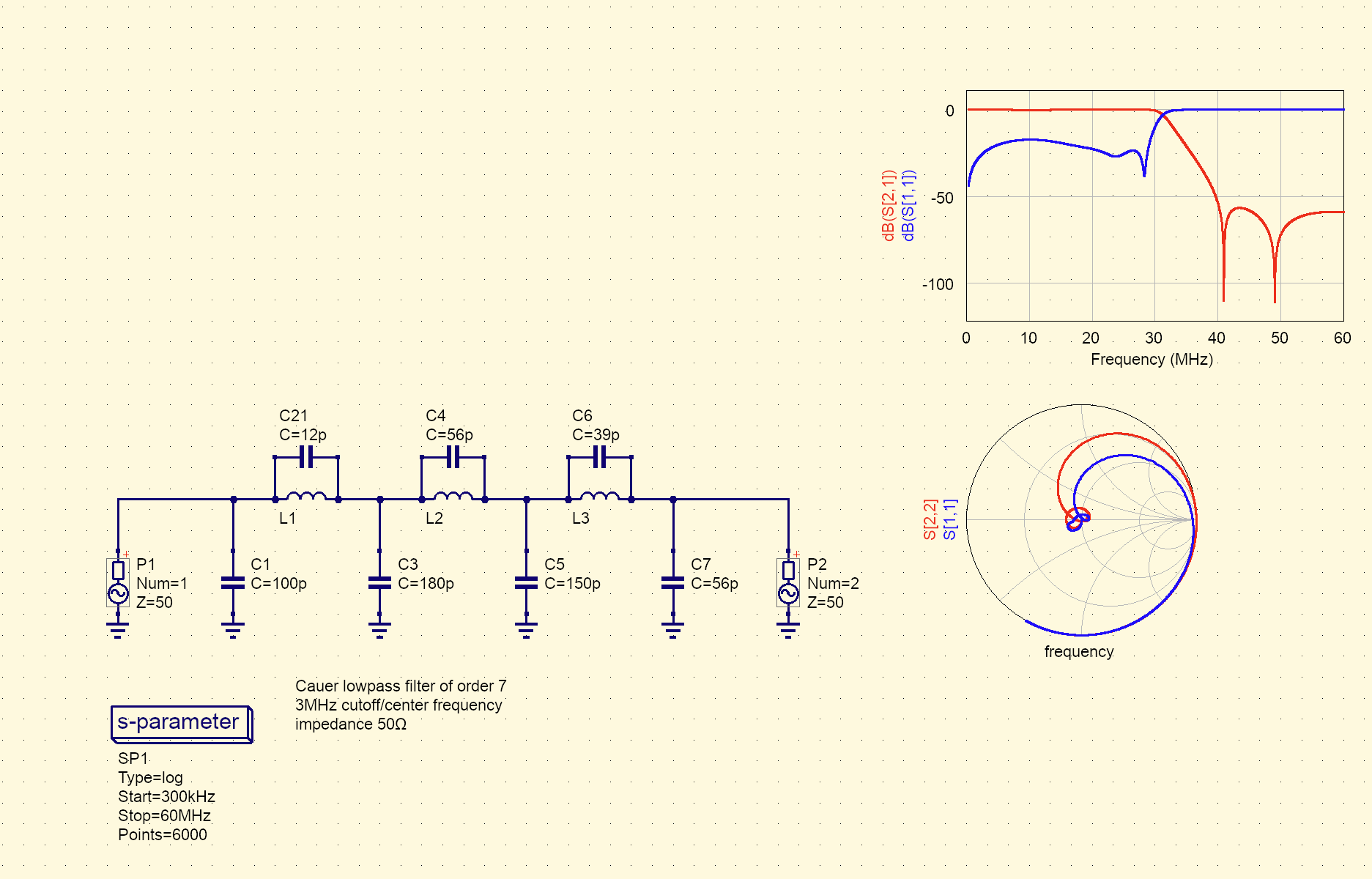
Dedicated single band SMD LPF
Single PCB - keeps manufacturing and assembly costs down
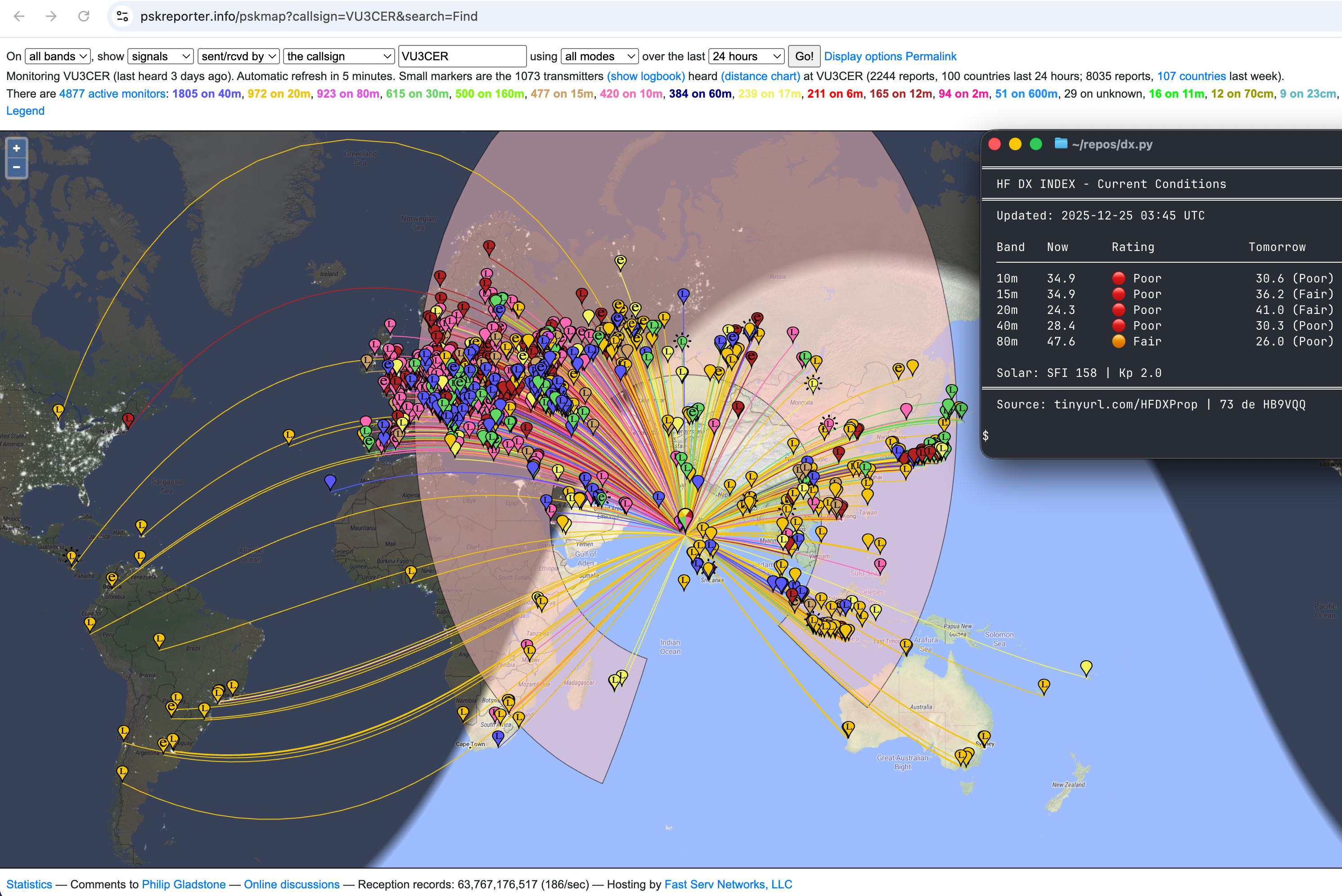
Superb RX performance (80 to 100+ countries in day)
Powers from a mobile phone
15m and 10m both using single LPF? DDX-UNO's first batch.
Think Pixie-CW but with relatively space-age components and technology!
Auto-mode: The MCU does stuff even without the phone connected!
XC6206P332MR-G, 3.3v 200mA LDO
How much power is being generated at 5V drain? 500mW plus is good!
Onboard SMA connector for antenna tuning?
Not a copy-paste of the same uSDX firmware
Modern design with modern ("space-age") components
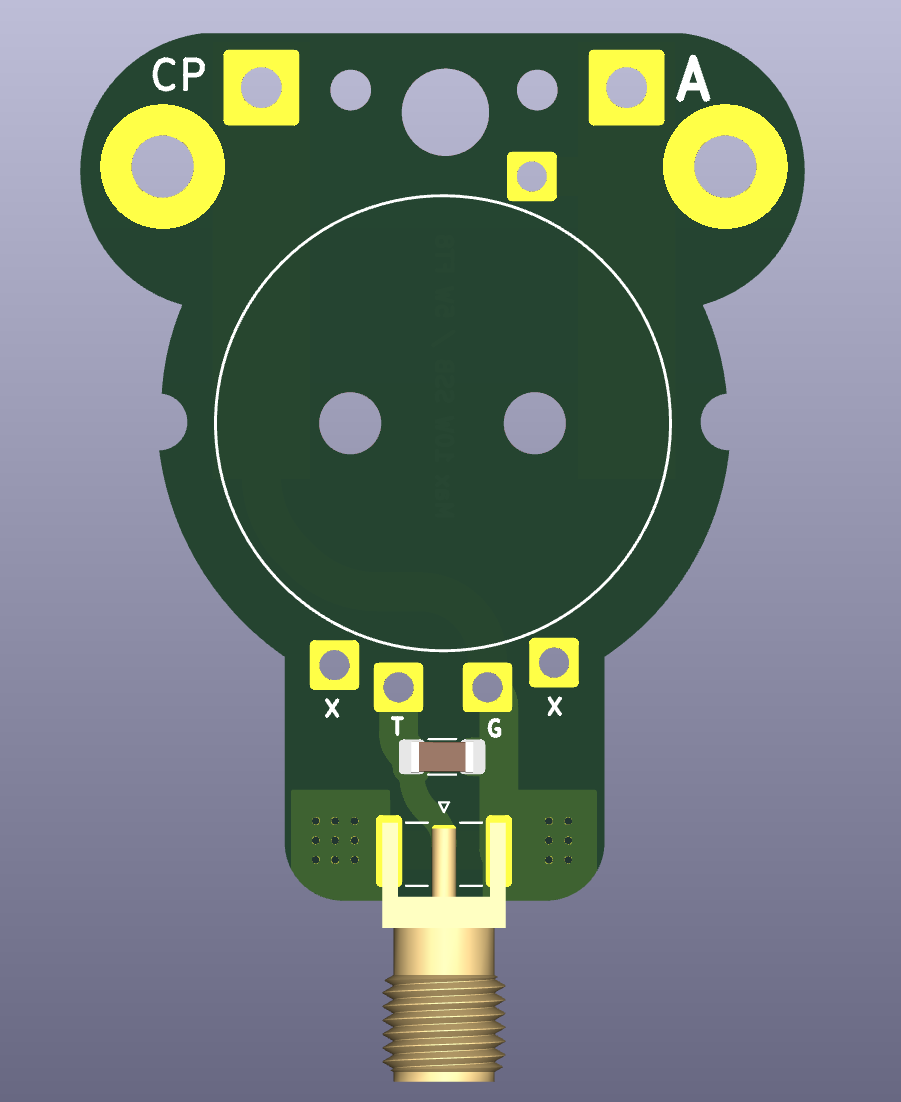
Inbuilt EFHW with a 1m to 3m counterpoise - EFHW Toroid ~16mm OD
Nope - We decided NOT to pursue this approach after running some HW experiments
INNOTION YG401530VBbased finals?TPS22917DBVR load switch IC - PTT based drain voltage for finals
TPAS169-73LF powered T/R switch
A fresh new architecture?
Puya SOP-16 'invisible' MCU - Used for AFP-FSK loop during TX only
CM108B as the only USB exposed chip
While there are better Cmedia chips (with embedded programmable MCU?) , they are pretty much unobtanium
Antenna Options
Target Price
Is a target price of <= 2000 INR possible? What about <= 1500 INR?
Schematic
Filter simulation (from TinyDX project):
The RX performance is pretty nice!